Allegiance

By Colonial
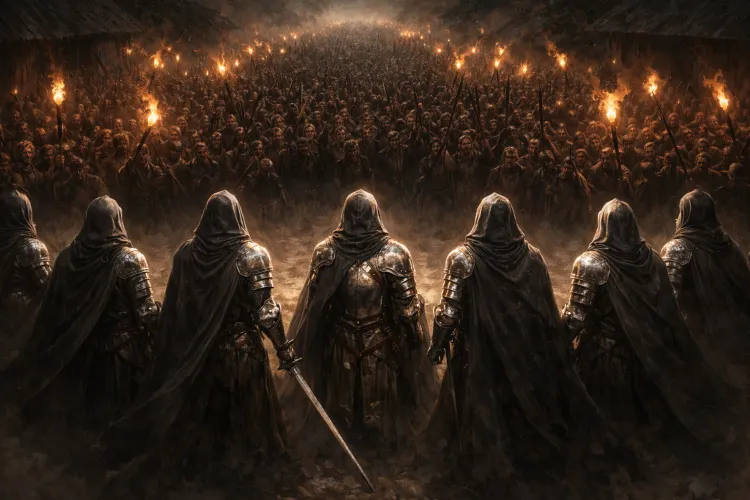
If any man is going to have sovereignty, he will not get it alone. The myth of the solitary conqueror is comforting but false. Every Arthur had a roundtable, every warlord a cadre, every king a court of men bound not merely by shared ideas and principles but by shared fate. Men, together, build the world. They always have. All social organization is first a product of male organization, and when male organization decays, everything built on top of it rots soon after. The modern world is living inside that rot, confused about its origins but surrounded by its consequences.
In my grandfather’s day, men met weekly with other men in organizations that demanded presence, continuity, and at least some measure of loyalty. Rotary clubs, Elks lodges, Masonic halls, and even male-only country clubs were not aesthetic preferences or social niceties. They were infrastructure. They created recurring contact, reputational memory, and informal enforcement of norms. A man who violated trust was known, and a man who showed up consistently accumulated social capital that could be cashed in when things went sideways. These organizations did not need to be overtly political to be powerful. Their power came from allegiance.
Today, most of these institutions are either gone, hollowed out, or reduced to weakly attended networking mixers with no real expectations and no real bonds. Men pass through them as consumers, not as members, able to leave, defect, or betray without consequence. There is no price for disloyalty because there is no shared destiny at stake, and therefore nothing real to lose. In other words, there is no real allegiance between the men inside them. They were easily hollowed out precisely because there was no real expectation of loyalty and no cost to disloyalty. Without true allegiance between men, there is no alliance sturdy enough on which society can build anything that lasts.
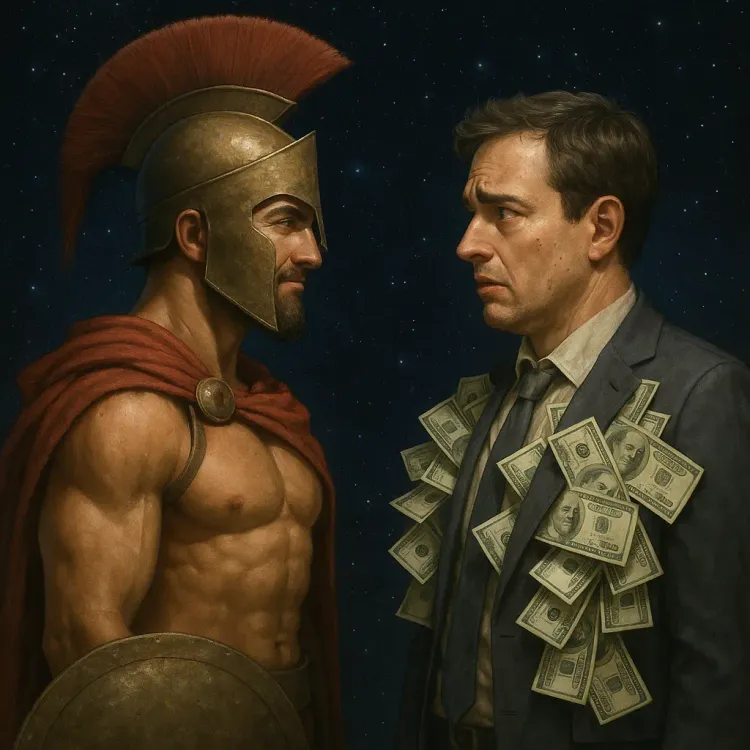
This collapse did not happen by accident. The liberalism that has engulfed the world since the Enlightenment deliberately elevated allegiance to abstract principles over allegiance to actual people. You are told that your highest loyalty must be to values, norms, procedures, or universal ideals, not to flesh-and-blood men who stand beside you. This sounds noble until you examine its effects. Principles cannot return allegiance. They do not show up when you are under pressure. They do not risk themselves for you, and they cannot be held accountable when they fail to uphold their loyalty.
Your people, however, can return allegiance. They can protect you, support you, fight for you when necessary, and stand next to you when the cost is real. This is why your enemies insist so loudly that you serve your principles above all else. They will police your adherence to them with fanaticism while quietly abandoning those same principles the moment it suits their interests. Then, when you choose principle over people, they will devour you and your people without hesitation, having already freed themselves from any reciprocal obligation.
History is unambiguous on this point. Groups that prioritize loyalty to one another endure. Groups that prioritize ideological purity over internal allegiance fracture, weaken, and are conquered. This does not mean principles are meaningless. It means they are secondary. Your people should broadly share principles with you, but the overriding principle must always be loyalty to one another. Loyalty engenders trust, and trust is the only foundation on which sovereignty can be built.
Sovereignty is not a feeling or an identity. It is the ability to dictate terms within a territory, whether that territory is physical, economic, or social. No man dictates terms alone for very long. If you are to enforce boundaries, extract value, or defend what you have built, you will need other men you can count on without hesitation. They will need you in the same way if they wish to achieve anything beyond temporary comfort. This mutual dependence is not a weakness. It is the source of power.
Modern men are actively discouraged from forming these bonds. They are told that dependence is pathology, that loyalty is dangerous, and that any strong male alliance is inherently suspect. Isolated men are easier to manage, easier to shame, and easier to replace. A man embedded in a loyal group is none of these. He has backup. He has memory behind him and consequence ahead of him. He is harder to coerce because coercion of one must contend with many.
These allegiances do not need to be large. In fact, they should not be. Small, tight groups of four to twelve men have historically been the most effective units of power. They move faster, trust more deeply, and can operate without bureaucratic drag. Bronze Age Pervert recently pointed out how Hugo Chávez’s rise hinged not on mass popularity at first, but on a secret alliance with three other military officers. Four men, aligned by loyalty rather than ideology, were enough to seize control of a nation-state. One can despise Chávez’s outcomes while still recognizing the mechanism that made them possible.
This pattern repeats everywhere once you start looking for it. Revolutions, coups, criminal empires, and successful companies all begin with small bands of men who choose one another over the system they inhabit. They do not ask permission, and they do not advertise their intentions. They build trust first, capability second, and only then do they act. By the time outsiders notice, the balance of power has already shifted.
The mistake modern men make is waiting for permission or scale before forming allegiance. They imagine that loyalty must emerge organically from shared beliefs or public institutions. In reality, loyalty is built through repeated action, shared risk, and mutual obligation. It is forged, not declared. A man who says he believes the same things you do is irrelevant. A man who shows up, keeps his mouth shut, and does what needs to be done is invaluable.
If sovereignty is your aim, then building teams of loyal men is not optional. It is foundational. Everything else is decoration. Ideas, aesthetics, and rhetoric matter only insofar as they serve cohesion and purpose. Strip away the illusions of modern individualism and you are left with an old truth that has never stopped being true. Men together can seize power. Men alone will be seized by others.