On some level, every modern man is an unbeliever.
This is no less true of the man kneeling beneath a crucifix than of the atheist who laughs at him from the street. The Christian professes Christ. The Muslim submits to Allah. The Jew invokes the God of his fathers. Yet when these men leave the sanctuary and return to ordinary life, they inhabit a world emptied of divine presence. The rain is weather. The oak is timber. The dog is an animal machine improved by affection. The mountain is so many tons of insensible stone. Their gods may have created the world, but they no longer appear within it.
Some recognize the poverty of this condition and cry with the father in the Gospel of Mark, “Lord, I believe; help thou mine unbelief.” Others call themselves atheists, agnostics, skeptics, or merely practical men. A few have known dreams that seemed prophetic, moments of impossible coincidence, sudden warnings, or a presence felt in the forest at dusk. Yet they commonly explain these things away as nerves and chance. If they cannot explain them away, they preserve them as rare emotional treasures, returning to them whenever their disbelief reveals itself to them.
No matter. They remain unbelievers.
Belief is not assent to a proposition concerning invisible things. It is commerce with the divine. A believer works with the gods, receives real strength, power and capability from them, gives to them, listens for them, and recognizes their operations in the world. His religion is not confined to an interior sentiment or an argument conducted in the privacy of the skull. The divine touches his senses. It arrives through sight and sound, through the taste of sacrifice, the smell of rain upon dust, the pressure of a place, or the sudden alteration of fortune. At times, he even sees and speaks with the gods face to face.
The modern religious man expects almost none of this. He prays, but is embarrassed to admit it if an answer comes. He asks for a sign, then fears being thought mad if he receives one. He speaks of the living God while living as though god were dead. At most, he enjoys a spiritual feeling and calls it faith. At worst, he philosophizes his way toward “divine truths” without once encountering anything divine.
The ancients possessed another flavor of existence.
Consider Pythagoras. His name still stands over one of the most famous truths in geometry, and the school formed around him joined mathematics, music, discipline, sacrifice, and the study of the soul into a single way of life. These were men who discovered numerical order in musical harmony and pursued proof with a severity that still commands the modern mind.
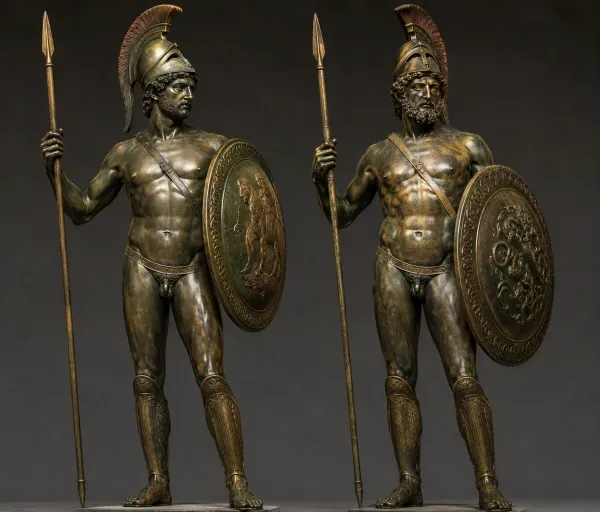
Yet Diogenes Laertius reports that the Pythagoreans held “the whole air” to be “full of souls,” among them daimones* and heroes who sent dreams, warnings of disease, and signs concerning the health of men and animals. Thales, another father of Greek natural philosophy, taught that the world was alive and full of daimones. Aristotle preserves the still more famous saying attributed to him: “All things are full of gods.”
Here is the scandal. The men who helped teach the West to reason did not believe that reason had ruled out the gods. Number did not disenchant the lyre. Geometry did not silence Apollo. Inquiry did not reduce the river to a quantity of water passing between two coordinates. The discovery of order in nature disclosed intelligence, soul, and divine presence. The more carefully they looked, the more alive the world became.
Why, then, do we turn away?
The usual answer is science. We are told that ancient men required spirits because they did not understand causes. They heard thunder and imagined Zeus. We understand electrical discharge, atmospheric pressure, and the rapid expansion of heated air. Zeus has therefore retreated before the weather station.
But what has actually been proved? Science identifies regular relations among appearances. It tells us what precedes a lightning strike, how much energy is released, and where the current may travel. This is magnificent knowledge. It gives men power. It does not reveal the final cause of lightning, electricity, or the laws by which either behaves. Every answer opens another chamber of causality. At the end of the corridor stands more mystery.
Science can observe the effects of will, but will as will is never found beneath a microscope. A man raises his hand. The physiologist traces the muscles, nerves, electrical impulses, and regions of the brain involved. He has mapped the event with admirable precision. Yet the willing itself is known only from within. Schopenhauer began with the declaration, “The world is my idea,” then drove beyond it to the more terrible claim: “the world is my will.” He understood that causal explanation can describe the appearance of an act while leaving its inward character untouched.
Will, if the word means anything, is a beginning. It is the power by which something acts rather than merely being acted upon. Plato therefore defined soul as “the motion which can move itself,” and called it “the first origin and moving power” of all that is. This is the matter modern thought carefully avoids. Science deals in causes. Will is precisely that which cannot be moved by a prior cause without ceasing to be will. The instrument can register the movement, but not the mover as mover.
Who, then, wields the will present in the world?
Aristotle proposed that behind motion there must stand “something which moves without being moved,” eternal and actual. From this line of thought later theologians built their great systems of the one true God. The argument possesses grandeur. It does not, however, settle the matter as neatly as its heirs pretend.
Can one unlimited will be a will at all? Will becomes visible through resistance. It chooses this and not that. It overcomes an obstacle, answers an opponent, courts an ally, or imposes form upon reluctant matter. A being without counter-will, without rival, and without any possibility of frustration does not choose in a manner intelligible to us. It simply is. To call that absolute being a will may be to smuggle the drama of plurality back into a unity from which all drama has been removed.
Perhaps man alone bears will in a world of dead objects. The subject acts while the object receives. The woodsman wills and the tree suffers. The rider commands and the earth resists beneath the horse. This is the instinctive metaphysics of modernity, even among men who have never read a philosopher.
Yet it produces the subject-object problem that philosophy has never solved. How does inwardness arise from that which is wholly without inwardness? At what point does dead matter, assembled in sufficient complexity, cross the invisible border and become a being for whom the world appears? Schopenhauer observed that subject and object are “inseparable even for thought,” each possessing meaning only through the other. Materialism does not solve this riddle by declaring the subject a secretion of the brain. It merely gives the riddle a clinical name.
There remains another explanation, ancient and terrible in its simplicity.
All things have will.
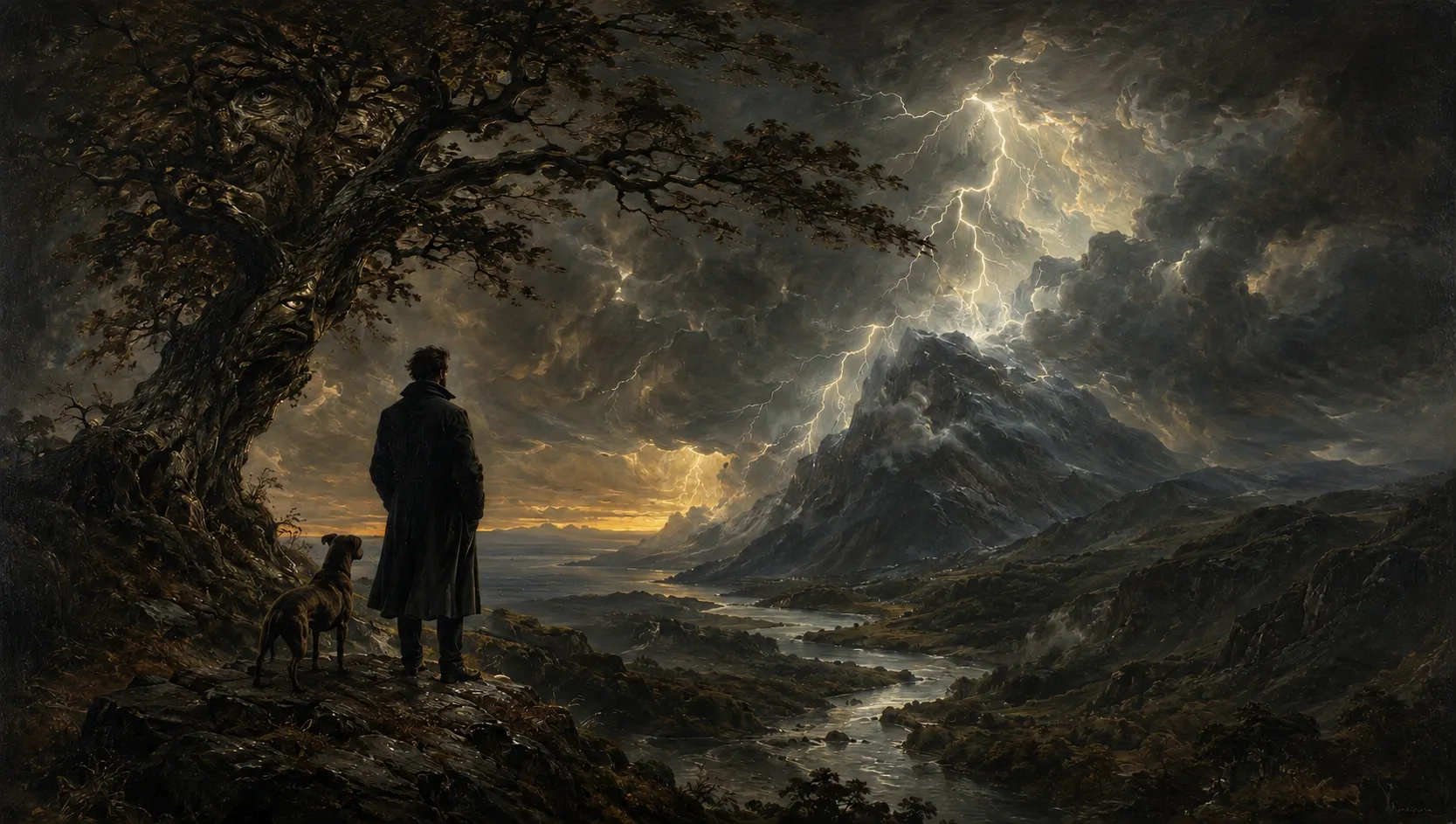
The man has will. The dog has will. The stag and hawk possess it. The tree reaches, withdraws, hardens, and answers the seasons according to its form. The river seeks its course, accepts one bank, breaks another, and remembers every contour of the land. The mountain gathers storms, governs waters, and imposes order upon every creature living in its shadow. The wind hunts openings. Lightning selects its path. The sea courts the moon and batters the shore.
The modern man objects that this is anthropomorphism. Perhaps. Yet his own habit is mechanomorphism. He takes a machine, which is an artifact of human will, then projects its deadness upon the entire cosmos. He calls the world machinery and imagines he has escaped metaphor. He has only chosen the poorer metaphor, one borrowed from the factory rather than the forest.
To say that all things possess will is not to claim that an oak deliberates like a senator or that a river composes private sentences. Different forms disclose different powers. The will of a dog is not the will of a man. The will of a storm is not the will of a dog. The error lies in supposing that because these wills are not human, they are nothing.
This is where belief begins again. Not in forcing oneself to accept an abstract creed, nor in cultivating a vague warmth called spirituality, but in entering disciplined relations with the powers, or wills, that actually compose one’s world. Attend to the character of a place. Learn which actions bring strength and which bring disorder. Make offerings that cost something. Keep promises. Ask, listen, test, and remember. Judge a divine relation as one judges every serious alliance: by its demands, its fruits, and the changes it works upon the man who enters it as well as the fortune or misfortune it brings him.
Credulity is not belief. A fool who invents a message behind every fallen leaf is no nearer the gods than the materialist who sees only cellulose. The believer must cultivate discrimination. The ancients built rites, priesthoods, taboos, and inherited methods precisely because divine commerce required discipline. Contact without form becomes delirium. Form without contact becomes modern religion.
A god who never enters the world is an opinion. A god who cannot be heard, seen, felt, obeyed, aided, offended, or drawn upon for power is a philosophical ornament. Men may praise such a being, but they do not believe in it. They believe in the office, the congregation, the inherited name, or the comfort of a moral system. The god itself remains absent.
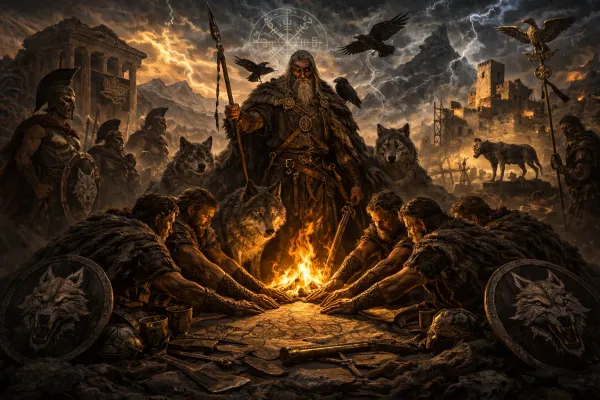
The old pagan gods appear the moment we cease insisting that the world is dead. They rise in the distinction between one place and another, in the peculiar intelligence of animals, in the violence of weather, and in the answering pressure of events. They are not primitive explanations for mechanisms we now understand. They are names for the wills behind the mechanisms. The wills with which human will must contend, bargain, unite, and sometimes make war.
Oh. There you are, old gods.
* daimones: In ancient Greek thought, daimones were intermediary spiritual intelligences or presences—neither strictly gods nor humans—understood as active forces within the world. The term later became linguistically associated with the Christian “demons,” but the meaning shifted significantly; in early Greek usage, daimones were not inherently evil and often referred to neutral or even beneficent guiding spirits or powers.